
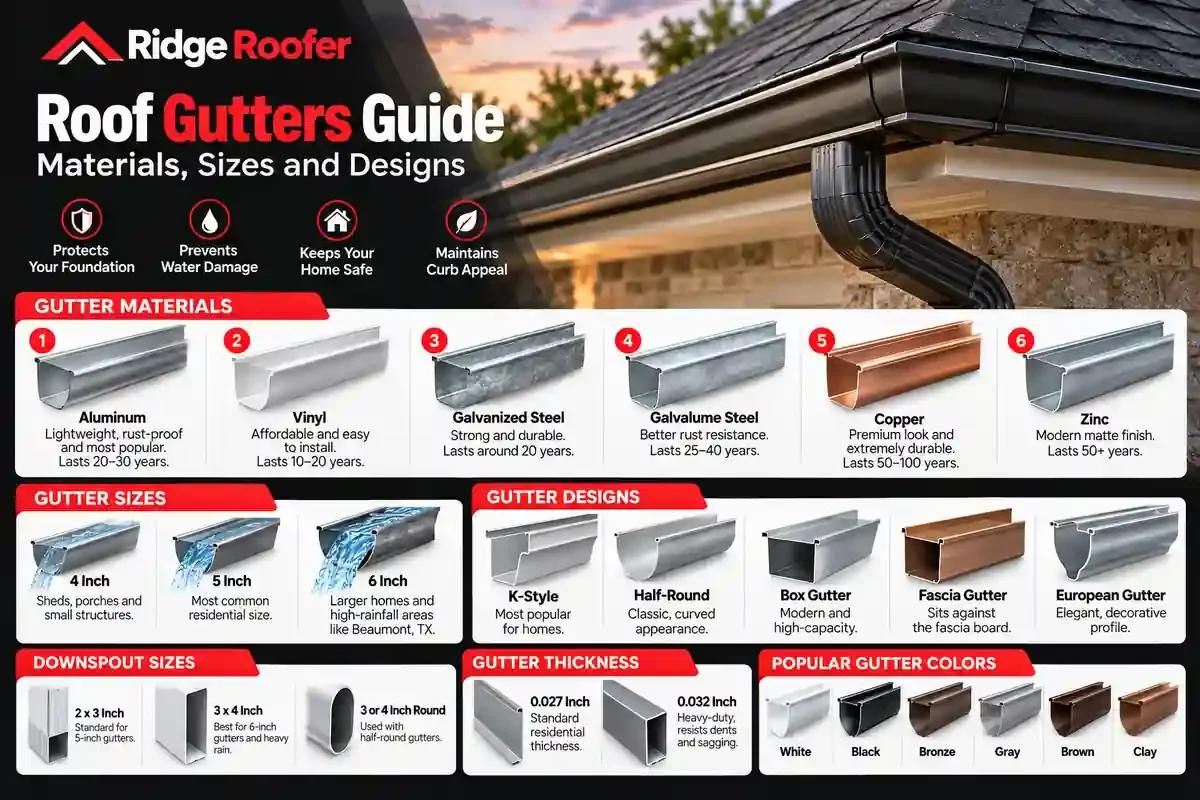
Roof gutters are made from aluminum, vinyl, galvanized steel, Galvalume, copper and zinc. The most common residential sizes are 5-inch and 6-inch, paired with 2 x 3 or 3 x 4 inch downspouts. The main designs are K-style, half-round, box, fascia and European gutters. For most homes in Beaumont, TX, 6-inch seamless aluminum K-style gutters offer the best balance of capacity, durability and cost during heavy Gulf Coast rain.
Why Gutters Matter More Than You Think
Gutters are easy to overlook, but they are one of the most important parts of your roofing system. Their job is simple: catch rainwater as it runs off your roof and carry it safely away from your home. When gutters are missing, undersized or failing, that water goes where it shouldn't.
Without a working gutter system, rainwater can:
- Damage your foundation by soaking the soil around your home, leading to cracks and settling
- Rot fascia boards and roof edges, inviting leaks and pests
- Flood basements and crawl spaces, creating mold and mildew
- Erode landscaping and wash away mulch, soil and plants
- Stain siding and brick with constant splashing and runoff
In Southeast Texas, where tropical storms and hurricanes can drop several inches of rain in just hours, a properly sized gutter system is not optional. It is essential protection.
Understanding gutter materials, sizes and designs helps you compare quotes fairly, choose a system that matches your home's style and avoid the common mistake of installing gutters that are too small for your roof.
Gutter Materials
The material you choose decides how long your gutters last, how they handle heavy rain and storms, and how they look on your home.
1. Aluminum Gutters
Aluminum is the most popular gutter material in the United States. It is lightweight, naturally rust-proof and available in dozens of factory-painted colors. Aluminum is also the standard material for seamless gutters made on site.
- Lifespan: 20–30 years
- Cost: Low to moderate
- Pros: Won't rust, easy to install, wide color choice, great value
- Cons: Thinner aluminum can dent from ladders, hail or falling branches
- Best for: Most homes, especially in humid coastal areas like Beaumont
2. Vinyl Gutters
Vinyl (PVC) gutters are the cheapest option and are often sold in home improvement stores for DIY installation. They snap together in sections and never rust.
- Lifespan: 10–20 years
- Cost: Lowest
- Pros: Inexpensive, lightweight, easy DIY
- Cons: Can crack, sag and fade under intense Texas heat and sun; not ideal for heavy rainfall
- Best for: Sheds, small additions and tight budgets
3. Galvanized Steel Gutters
Galvanized steel gutters are coated with zinc to slow rust. They are much stronger than aluminum and handle heavy loads from rain, debris and ladders well.
- Lifespan: About 20 years
- Cost: Moderate
- Pros: Very strong and dent-resistant
- Cons: Heavy, and will eventually rust, especially where the coating is scratched or near salt air
- Best for: Areas with heavy storms and falling debris
4. Galvalume Steel Gutters
Galvalume steel uses an aluminum-zinc coating that resists rust better than standard galvanized steel. It is often chosen to match metal roofs.
- Lifespan: 25–40 years
- Cost: Moderate
- Best for: Homes with metal roofing
5. Copper Gutters
Copper is the luxury choice. It never rusts and slowly develops a beautiful blue-green patina over time. Copper gutters are usually installed by skilled craftsmen with soldered seams.
- Lifespan: 50–100 years
- Cost: Very high
- Pros: Stunning appearance, extremely durable, adds home value
- Cons: Expensive; patina can stain light-colored siding
- Best for: Luxury, historic and high-end custom homes
6. Zinc Gutters
Zinc gutters offer a soft matte blue-grey finish and form a natural protective layer as they age.
- Lifespan: 50+ years
- Cost: High
- Best for: Modern and European-style homes
Gutter Sizes
Gutter size is one of the most important choices you'll make. Gutters that are too small will overflow during heavy rain, sending water right where you don't want it.
Gutter Widths
| Size | Typical use |
|---|---|
| 4 inch | Sheds, porches and small structures; usually too small for a home |
| 5 inch | The most common residential size in the U.S.; suits average homes |
| 6 inch | Larger homes, steep roofs and high-rainfall areas like Southeast Texas |
| 7–8 inch | Commercial buildings, warehouses and very large roofs |
A 6-inch gutter carries roughly 40% more water than a 5-inch gutter, which makes a big difference during Gulf Coast downpours.
Downspout Sizes
Downspouts carry water from the gutter to the ground. Bigger downspouts drain faster and clog less.
- 2 x 3 inch: Standard downspout for 5-inch gutters
- 3 x 4 inch: Larger downspout for 6-inch gutters; handles heavy rain and debris better
- 3 or 4 inch round: Used with half-round gutters for a classic look
A general rule is one downspout for every 30 to 40 feet of gutter, plus one at each corner where needed.
Gutter Thickness
Aluminum gutters usually come in two thicknesses:
- 0.027 inch: Standard residential thickness
- 0.032 inch: Heavy-duty; resists dents and sagging better and is recommended for storm-prone areas
Seamless vs. Sectional Gutters
- Seamless gutters are formed on site from a single coil of metal and cut to the exact length of each roof edge. With no joints along the run, they leak less, look cleaner and last longer.
- Sectional gutters come in pre-cut pieces, usually 10 feet long, and are joined together. They are cheaper and DIY-friendly, but every joint is a possible leak point.
How the Right Size Is Chosen
A professional sizes gutters based on three things:
- Roof area: The square footage of each roof section that drains into a gutter
- Roof pitch: Steeper roofs send water down faster and need more capacity
- Local rainfall intensity: How much rain can fall in a short, heavy storm
For most Beaumont homes, these factors point to 6-inch seamless gutters with 3 x 4 inch downspouts.
Gutter Designs and Styles
The design, or profile, of your gutters affects both how much water they carry and how they look from the street.
1. K-Style Gutters
K-style gutters have a flat back and a decorative curved front that looks like crown molding. From the side, the shape resembles the letter "K." They mount flat against the fascia board and hold more water than a half-round gutter of the same width.
- Look: Clean and decorative; blends with most homes
- Common materials: Aluminum, steel, vinyl, copper
- Best for: Most modern and suburban homes; the standard U.S. choice
2. Half-Round Gutters
Half-round gutters are shaped like a pipe cut in half. Their smooth, rounded form gives a traditional and elegant look. Because there are no inside corners, they are easy to clean. They are attached with exposed hangers or brackets, which add to their classic style.
- Look: Classic, graceful curves
- Common materials: Copper, zinc, aluminum
- Best for: Historic, Victorian, colonial and luxury homes
3. Box Gutters
Box gutters are large, rectangular channels that can handle very high volumes of water. Some are built directly into the roof structure so they are hidden from view.
- Look: Wide and boxy, or completely concealed when built in
- Best for: Commercial buildings, large homes and historic properties
- Note: Built-in box gutters need regular maintenance and expert repair
4. Fascia Gutters
Fascia gutters combine the gutter and the fascia board into one custom-formed piece attached directly to the rafter tails. This creates a smooth, seamless roof edge.
- Look: Sleek and fully integrated
- Best for: Custom and modern homes
5. European-Style Gutters
European gutters are a premium version of half-round gutters with a rolled bead along the front edge. The bead adds strength and a refined finish.
- Common materials: Copper and zinc
- Best for: High-end homes that want a distinctive, old-world look
6. Hidden (Concealed) Gutters
Hidden gutters sit behind the roof edge or inside the wall line, so the roofline stays completely clean.
- Best for: Modern and minimalist architecture
- Note: Must be carefully designed and installed to avoid hidden leaks
Gutter Accessories
The right accessories make your gutter system work better and need less maintenance:
- Gutter guards and leaf guards: Mesh, screen or solid covers that keep leaves, pine needles and debris out, reducing clogs and cleaning
- Downspout extensions and splash blocks: Direct water at least 4 to 6 feet away from your foundation
- Underground drain lines: Carry water even farther away, out of sight
- Rain chains: Decorative chains or cups that replace downspouts and guide water down in a visible, attractive way
- Heavy-duty hidden hangers: Hold gutters firmly in place during high winds and heavy rain
Gutter Colors
Aluminum and steel gutters come in a wide range of factory-baked colors, including white, almond, clay, bronze, brown, black, charcoal and many more. Most homeowners choose one of two approaches:
- Match the trim or fascia so the gutters blend in for a clean, seamless look
- Match the roof or contrast with the siding, such as black or bronze gutters on a light home, for a bold, modern look
Copper and zinc are usually left unpainted to show off their natural finish.
Choosing Gutters for a Texas Home
Beaumont and Southeast Texas bring hurricanes, tropical storms, high humidity and intense sun. Keep these points in mind:
- Go bigger: 6-inch gutters with 3 x 4 inch downspouts handle sudden heavy rainfall far better than 5-inch systems.
- Choose seamless: Fewer joints mean fewer leaks.
- Pick rust-resistant metal: Aluminum is ideal for humid, coastal conditions.
- Use strong hangers: Hidden hangers spaced about every 2 feet help gutters stay put in high winds.
- Add gutter guards: They reduce clogs from storm debris and nearby trees.
- Avoid vinyl for main gutters: Texas heat can make it brittle and warped.
Gutter Materials at a Glance
| Material | Lifespan | Cost | Rust resistance | Best for |
|---|---|---|---|---|
| Aluminum | 20–30 years | Low–moderate | Excellent | Most homes, coastal areas |
| Vinyl | 10–20 years | Lowest | Excellent | Sheds and small budgets |
| Galvanized steel | About 20 years | Moderate | Fair | Heavy storms and debris |
| Galvalume steel | 25–40 years | Moderate | Good | Homes with metal roofs |
| Copper | 50–100 years | Very high | Excellent | Luxury and historic homes |
| Zinc | 50+ years | High | Excellent | Modern and European-style homes |
Lifespans and costs are typical ranges and depend on installation, maintenance and local weather.
Protect Your Home with the Right Gutters
Gutters are a small part of your home with a big job. The right material, size and design will protect your roof, foundation and landscaping for decades. Our family-owned team has more than 20 years of experience installing seamless gutters and roofing systems across Beaumont and Southeast Texas. We'll measure your roof, recommend the right size and style and give you an honest, upfront quote.
Call us today for a free gutter and roof inspection.
Talk to a Beaumont roofer
Free inspection and a written estimate. Office 8 AM – 8 PM, 24/7 emergency support.
Call (409) 262-0156