
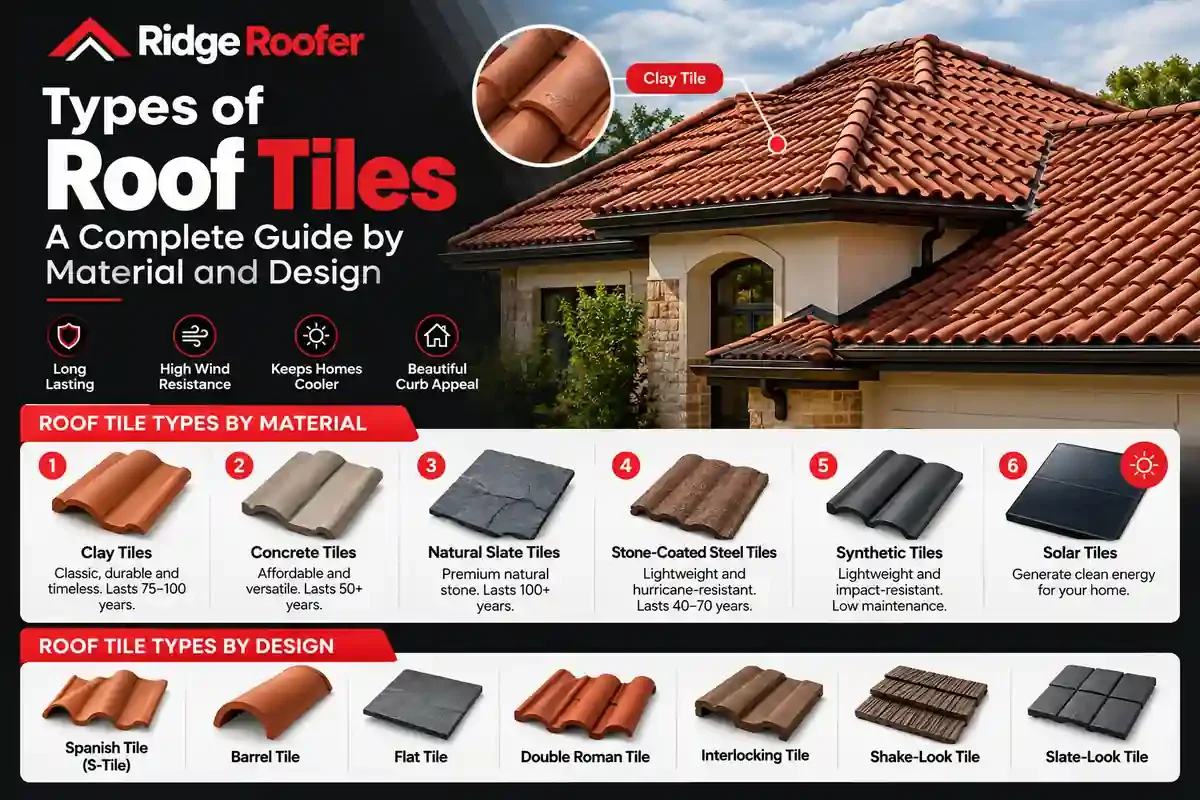
Roof tiles are grouped by material and design. The main materials are clay, concrete, natural slate, stone-coated steel, synthetic and solar tiles. The main designs are Spanish (S-tile), barrel, flat, Double Roman, interlocking, shake-look and slate-look. For hurricane-prone Beaumont, TX, interlocking concrete or stone-coated steel tiles offer the best balance of wind resistance, durability and value.
Why Choose a Tile Roof?
A tile roof is one of the longest-lasting, most beautiful investments you can make in your home. Well-installed tile roofs commonly last 50 years or more, far outliving standard asphalt shingles. For homeowners in Beaumont and across Southeast Texas, tile offers something even more valuable: real protection against hurricane-force winds, heavy rain and the relentless Texas sun.
But not all roof tiles are the same. Tiles differ in two important ways: the material they are made from and the design (profile) they are shaped into. The material decides how strong, heavy, durable and expensive your roof will be. The design decides how your home looks from the street. In this guide, we break down every major tile option so you can choose the right roof for your home, your style and your budget.
Roof Tile Types by Material
1. Clay Tiles
Clay tiles are the classic choice and have been used on homes for thousands of years. They are made from natural clay that is shaped and fired in a kiln at very high temperatures, which makes them hard, dense and extremely long-lasting.
Benefits:
- Can last 75–100 years with proper installation and care
- Color is baked into the tile, so it will not fade in the Texas sun
- Naturally fire-resistant and resistant to rot and insects
- Excellent at keeping attics cooler, which can lower energy bills
- Timeless, upscale curb appeal
Things to consider: Clay tiles are heavy, so your roof structure may need to be checked or reinforced before installation. They are also one of the more expensive options and can crack if walked on incorrectly. Clay is ideal for Spanish, Mediterranean and Mission-style homes.
2. Concrete Tiles
Concrete tiles are made from a mix of sand, cement and water, molded under high pressure. They offer much of the look of clay at a lower price, which makes them one of the most popular tile options in Texas.
Benefits:
- Lifespan of 50 years or more
- More affordable than clay or slate
- Available in a huge range of colors and shapes, including designs that mimic wood shake and slate
- Strong, fire-resistant and able to stand up to high winds when installed correctly
Things to consider: Concrete tiles are even heavier than clay and can absorb more water. Their surface color may slowly fade over many years, though quality tiles use colored concrete throughout to reduce this.
3. Natural Slate Tiles
Slate is a natural stone that is split into thin, flat tiles. It is often considered the most luxurious roofing material available.
Benefits:
- One of the longest-lasting roofs, often 100 years or more
- Elegant, natural stone appearance with rich color variation
- Fireproof and highly resistant to water
- Adds major value and prestige to a home
Things to consider: Slate is very heavy and is the most expensive tile option. It must be installed by experienced, specialized crews, and repairs require matching natural stone.
4. Stone-Coated Steel (Metal) Tiles
Stone-coated steel tiles are steel panels coated with a protective layer and finished with stone granules. They are designed to look like clay tile, wood shake or slate while weighing much less.
Benefits:
- Very lightweight, often suitable without structural reinforcement
- Excellent wind and impact resistance, a strong choice for hurricane-prone areas like Beaumont
- Will not crack or break like clay or concrete
- Lifespan of 40–70 years
Things to consider: Stone-coated steel costs more than asphalt shingles and may not have the exact depth and texture of real clay or slate up close.
5. Synthetic (Composite) Tiles
Synthetic tiles are made from engineered materials such as recycled plastics and rubber. They are built to copy the look of slate, clay or shake.
Benefits:
- Lightweight and easy to install
- High impact resistance; many products carry Class 4 impact ratings
- Lower cost than natural slate or clay
- Low maintenance
Things to consider: Synthetic tiles are a newer product, so long-term performance varies by brand. Always choose a product with a strong manufacturer warranty.
6. Solar Tiles
Solar roof tiles combine roofing and solar power in one product. They look like regular roof tiles but generate electricity for your home.
Benefits:
- Produces clean energy and can lower electric bills
- Sleek, modern look without bulky solar panels
- Long-term savings in a sunny state like Texas
Things to consider: Solar tiles have a high upfront cost and are usually installed on part of the roof, combined with standard tiles.
Roof Tile Types by Design
Once you choose a material, the next step is the tile profile. The profile is the shape of the tile, and it has the biggest impact on how your roof looks.
1. Spanish Tile (S-Tile)
Spanish tiles have a gentle "S" shaped curve that creates a flowing, wave-like pattern across the roof. They are one of the most recognizable tile styles and give homes a warm, Mediterranean character. Spanish tiles are available in both clay and concrete and pair perfectly with stucco walls and arched windows.
2. Barrel Tile (Mission Tile)
Barrel tiles are half-cylinder shaped tiles laid in alternating rows: one row facing up and the next facing down. This creates deep, rounded channels and strong shadow lines. Barrel tile is the traditional look of Spanish Mission and Southwestern homes and is usually made from clay.
3. Flat Tile
Flat tiles have a smooth, low-profile surface that gives a clean, modern and elegant appearance. They work well on contemporary homes, as well as on traditional homes where a slate-like look is wanted. Flat tiles are commonly made from concrete or slate.
4. Double Roman Tile
Double Roman tiles feature two rounded channels with a flat section in between. They offer a balance between the curved look of Spanish tile and the simple lines of flat tile. Their interlocking design also helps improve water flow and wind resistance.
5. Interlocking Tile
Interlocking tiles have grooves and edges that lock into neighboring tiles. This tight fit helps keep wind-driven rain out and makes the roof more stable during storms, which is an important advantage in Southeast Texas. Many concrete and clay tiles today use an interlocking design.
6. Shake-Look Tile
Shake-look tiles are designed to copy the rustic, textured appearance of natural wood shakes. Unlike real wood, they do not rot, split or attract insects, and they are much more fire-resistant. They are a great fit for ranch, craftsman and farmhouse-style homes.
7. Slate-Look Tile
Slate-look tiles give you the elegant appearance of natural slate at a lower weight and cost. Made from concrete, stone-coated steel or synthetic materials, they are ideal for homeowners who love the slate style but want a more budget-friendly option.
Tile Designs at a Glance
| Design | Look | Common materials | Best for |
|---|---|---|---|
| Spanish (S-Tile) | Flowing S-shaped waves | Clay, concrete | Mediterranean homes |
| Barrel (Mission) | Deep half-round channels | Clay | Mission and Southwestern homes |
| Flat | Smooth, clean, low profile | Concrete, slate | Modern and traditional homes |
| Double Roman | Two curves with a flat center | Concrete, clay | Balanced classic look |
| Interlocking | Tight locking edges | Concrete, clay | Storm and wind protection |
| Shake-Look | Rustic wood texture | Concrete, steel, synthetic | Ranch and farmhouse homes |
| Slate-Look | Elegant stone appearance | Concrete, steel, synthetic | Slate style on a budget |
How to Choose the Right Tile for a Texas Home
The best tile for your roof depends on more than looks. Here are the key factors to think about before you decide:
- Hurricane and wind resistance: Beaumont sits in a hurricane-prone coastal zone. Interlocking tiles and stone-coated steel offer excellent wind performance, and every tile must be fastened to local building code requirements.
- Heat and sun: Clay and concrete tiles allow air to flow beneath them, which helps keep attics cooler during long Texas summers. Lighter colors reflect even more heat.
- Roof structure and weight: Clay, concrete and slate are heavy. A professional inspection will confirm whether your roof framing can support them or if a lighter option is better.
- Budget: Concrete and stone-coated steel offer great value. Clay and slate cost more upfront but can last a lifetime.
- Home style: Match the tile design to your home's architecture. Spanish and barrel tiles suit Mediterranean homes, while flat, slate-look and shake-look tiles suit modern and traditional homes.
- Hail and impact resistance: Look for Class 4 impact-rated products, which may also qualify for insurance discounts with some providers.
Roof Tile Materials at a Glance
| Material | Typical lifespan | Weight | Cost | Best for |
|---|---|---|---|---|
| Clay | 75–100 years | Heavy | High | Spanish and Mediterranean homes |
| Concrete | 50+ years | Very heavy | Moderate | Value with a tile look |
| Natural slate | 100+ years | Very heavy | Highest | Luxury and historic homes |
| Stone-coated steel | 40–70 years | Light | Moderate–high | Hurricane-prone areas |
| Synthetic | 30–50 years | Light | Moderate | Impact resistance on a budget |
| Solar | 25–30 years (power output) | Moderate | Highest | Energy savings |
Lifespans are typical ranges and depend on installation quality, maintenance and local weather.
Get Expert Help Choosing Your Tile Roof
Choosing a roof is a big decision, and you don't have to make it alone. Our certified crews have more than 20 years of experience installing and repairing tile roofs across Beaumont and Southeast Texas. We'll inspect your roof, explain your options honestly and give you a clear, fair quote with no hidden costs.
Ready to upgrade your roof? Call us today for a free roof inspection and estimate.
Talk to a Beaumont roofer
Free inspection and a written estimate. Office 8 AM – 8 PM, 24/7 emergency support.
Call (409) 262-0156